
Mold doesn’t discriminate. It shows up in brand-new homes and century-old farmhouses alike. But if you live in the Tyler area, there’s something important you should know: the climate here creates almost ideal conditions for mold to grow, spread, and cause real damage to your home and your family’s health.
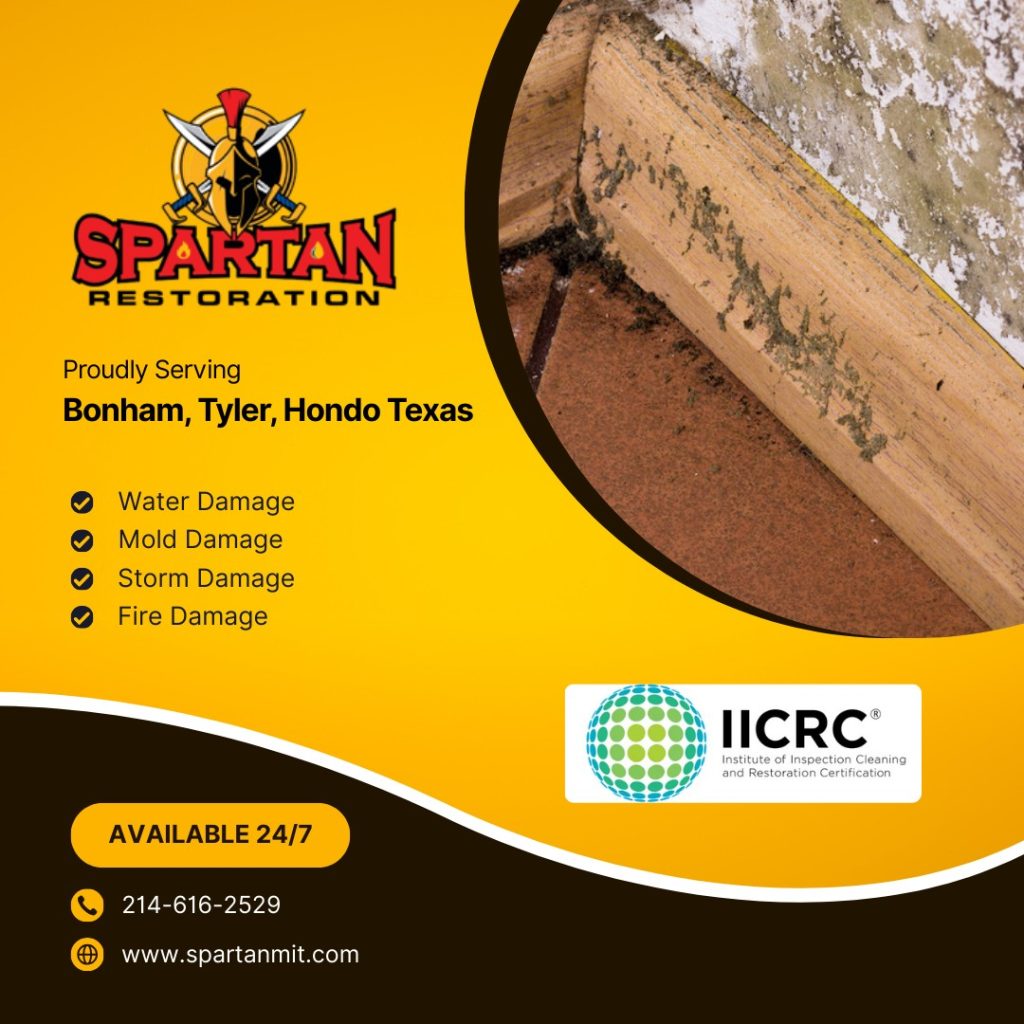
At Spartan MIT, we handle mold remediation for Tyler and Smith County homeowners, and we consistently see how quickly a small moisture problem can become a significant mold situation in East Texas. Here’s what you need to understand — and what you can do about it.
The East Texas Climate and Mold: A Perfect Storm
Tyler sits in the Piney Woods region of East Texas, which is classified as a humid subtropical climate zone. The region receives more rainfall than virtually anywhere else in Texas — upwards of 45 to 50 inches annually — and humidity levels stay elevated for much of the year. Summers are hot and wet. Winters are mild enough that mold never truly gets a cold-weather break the way it might in northern states.
Mold spores are everywhere in our environment — they’re invisible, airborne, and completely normal. The problem begins when those spores land on a damp surface with organic material (like wood framing, drywall, or carpet padding) and find the warmth and moisture they need to colonize. In East Texas, those conditions can exist almost year-round.
Mold can begin growing within 24 to 48 hours of a moisture event. That means a roof leak, a slow pipe drip, or even high indoor humidity without a visible water source can be enough to start a mold problem — often in places you can’t see.
Common Places Mold Hides in Tyler Homes
Mold often grows where homeowners aren’t looking. The most common locations we find mold in East Texas homes include:
- Behind drywall and inside wall cavities near plumbing
- Under flooring — especially hardwood and carpet over concrete slab
- In attic spaces, particularly after roof leaks or inadequate ventilation
- Around window frames and sills where condensation builds up
- In crawl spaces (more common in older Tyler-area homes)
- Inside HVAC systems and ductwork — mold here can spread spores through the entire house
- Under and behind kitchen and bathroom cabinets near supply lines
One thing that surprises many homeowners is that mold doesn’t always have an obvious smell or visible discoloration. By the time you notice a musty odor or dark staining, a colony may already be well-established.
Warning Signs You May Have a Mold Problem
Watch for these indicators that mold may be present in your Tyler home:
- A persistent musty or earthy odor, especially in enclosed spaces
- Visible dark spots, fuzzy growth, or discoloration on walls, ceilings, or grout
- Allergy-like symptoms — sneezing, runny nose, itchy eyes — that improve when you leave the house
- Worsening asthma or respiratory symptoms among family members
- Warped, bubbling, or discolored drywall or paint
- A previous water damage event that wasn’t fully dried out professionally
If you’ve experienced any water intrusion — a roof leak, flooding, a burst pipe, even an appliance overflow — and it wasn’t remediated professionally, there’s a real possibility that mold began growing in areas that weren’t completely dried.
Why You Shouldn’t DIY Mold Remediation
Texas requires that mold assessors and remediators working on projects above a certain size be licensed through the Texas Department of Licensing and Regulation (TDLR). But beyond the legal side of it, there are practical reasons to trust professionals with mold.
Disturbing mold without proper containment can release thousands of spores into the air and spread the problem to areas of your home that weren’t affected. Professional remediation involves sealing off affected areas, using negative air pressure, wearing appropriate protective equipment, and verifying the results with post-remediation testing — steps that simply aren’t practical for a DIY approach.
Spartan MIT’s mold remediation process includes a thorough assessment, containment of affected areas, removal of contaminated materials, HEPA vacuuming and antimicrobial treatments, and final verification to confirm the mold has been eliminated — not just painted over or covered up.
Protecting Your Tyler Home from Mold Year-Round
The best mold prevention strategy is controlling moisture. Here are practical steps Tyler homeowners can take:
- Keep indoor humidity below 50% — a dehumidifier can help during East Texas’s humid summers
- Fix plumbing leaks immediately, no matter how small they seem
- Make sure your bathroom and kitchen exhaust fans actually vent to the outside
- Have your roof inspected after significant storms
- Ensure your attic has adequate ventilation to prevent moisture buildup
- If you’ve had water damage, always use professional drying equipment — fans alone aren’t enough to dry wall cavities
Spotted Something Suspicious? Call Spartan MIT
If you’ve noticed any of the warning signs above, or if you’ve had water damage that wasn’t professionally dried, it’s worth having your home assessed. Spartan MIT serves Tyler and Smith County with professional mold remediation services — we’ll give you a straight answer about what we find and a clear plan for making it right. Reach out anytime, we’re here to help.