
If you’ve lived in Tyler for any length of time, you already know how fast the weather can turn. One afternoon the sun is out over the Piney Woods, and by evening you’re watching rain pour through a leaking roof or rising water creep toward your back door. Water damage is one of the most common — and most costly — home emergencies East Texas homeowners face, and knowing what to do in those first few hours makes a significant difference in how much damage you end up dealing with.
At Spartan MIT, we’re proud to serve the Tyler and Smith County community. We’ve helped plenty of local families get their homes back to normal after unexpected water damage, and we want you to be as prepared as possible before something goes wrong.
Why Tyler Homes Are Especially Vulnerable to Water Damage
Tyler sits squarely in the humid subtropical climate zone of East Texas, and the region receives between 43 and 50 inches of rainfall each year on average — making it one of the wetter parts of the state. The Piney Woods landscape also means heavy tree cover, which can translate to clogged gutters, debris-blocked drainage, and roof damage from falling limbs during storms.
Common causes of water damage in Tyler-area homes include:
- Heavy rain and flash flooding, which can overwhelm drainage systems quickly
- Roof leaks from severe storms, hail damage, or aging shingles
- Burst or frozen pipes during rare but damaging winter freezes
- Appliance failures — washing machines, water heaters, and dishwashers
- HVAC condensation and drain line clogs
- Foundation seepage, especially in older homes in central and west Tyler
The Neches River watershed runs through the region, and several Smith County roads see regular flooding after significant storms. If your property is in a low-lying area or near a creek, the risk is even higher.
What to Do the Moment You Discover Water Damage
Speed matters more than almost anything else in water damage situations. Mold can begin to grow in as little as 24 to 48 hours in warm, humid conditions — and Tyler’s climate provides exactly those conditions year-round.
Here’s what to do right away:
- Make sure the area is safe — turn off electricity to affected rooms if there’s any risk of water contact with outlets or wiring
- Stop the water source if you can — shut off the main water valve if a pipe has burst
- Remove standing water using a mop, wet-dry vacuum, or towels for smaller amounts
- Move furniture, rugs, and valuables out of wet areas
- Open windows and run fans to start airflow, but don’t use your HVAC system if ductwork may be affected
- Document everything with photos and video before you start cleaning up — you’ll need this for your insurance claim
What you should NOT do is wait to call a professional. Hidden moisture inside walls, under flooring, and in ceiling cavities can linger for days or weeks undetected, eventually leading to structural damage, rot, and mold growth that costs far more to remediate than the original water event would have.
The Professional Water Damage Restoration Process
When Spartan MIT responds to a water damage call in Tyler, here’s what you can generally expect:
Inspection and moisture mapping: We use professional-grade moisture meters and thermal imaging to find every area of water intrusion — including spots you can’t see.
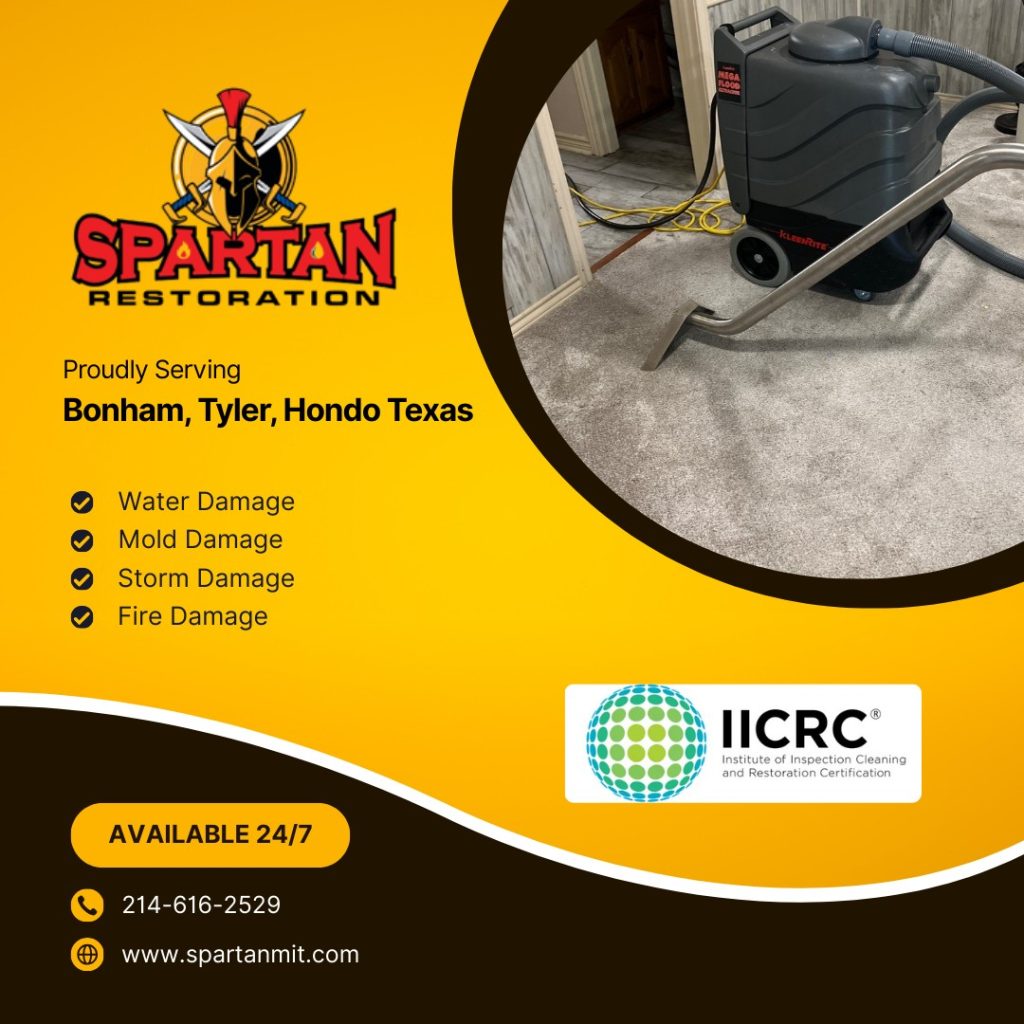
Water extraction: Industrial pumps and wet-vacs remove standing and trapped water quickly.
Structural drying: High-powered air movers and commercial dehumidifiers dry out affected materials from the inside out. This typically takes 3 to 5 days depending on the extent of damage.
Antimicrobial treatment: We apply professional treatments to prevent mold from taking hold in affected areas.
Restoration: Once everything is dry and verified with moisture readings, we can help coordinate repairs — drywall replacement, flooring, and more.
Does Homeowners Insurance Cover Water Damage in Texas?
This is one of the most common questions we hear, and the answer depends on the cause. Most standard Texas homeowners policies (commonly HO-A policies) cover sudden and accidental water damage — like a burst pipe or an appliance that suddenly fails. They typically do not cover flooding from outside the home (that requires separate flood insurance through FEMA’s National Flood Insurance Program) or damage that results from a slow leak you could have caught and fixed over time.
As a rule of thumb: if it happened suddenly and you couldn’t have prevented it, there’s a good chance your policy covers it. If it’s been slowly leaking for months, coverage gets murky. When in doubt, document the damage thoroughly and call your insurance agent right away — most Texas policies require you to report water damage within 30 days of discovery.
We work directly with all major insurance carriers and can help you document damage properly to support your claim.
Call Spartan MIT — Tyler’s Local Water Damage Experts
When water damage hits, you want someone who can be there fast and knows East Texas. Spartan MIT provides 24/7 emergency response to Tyler and Smith County, and we’re ready when you need us. Don’t let a water emergency become a mold problem — call us the moment you discover damage.